Last Updated: 3/20/2026
To get your content cited by AI Overviews, prioritize the structure and freshness of your content. By building a clear “map” using descriptive headings, updated dates, and concise lists, you provide the specific signals AI bots need to verify and surface your information as a top-tier answer.

Here are my top five tips for writing content to get cited in the AI Overviews.
Note: I use the term “article” here to refer to blog posts, as both serve the same SEO purpose.
1. Front-load the Value of your Article
Give the answer to the reader’s question (their reason for reading this blog post) at the top of the blog post, within the first 100 words. Keep this summary to 40–60 words.
AI crawlers prioritize the “above the fold” content. If the direct answer to the question is in the first 100 words, the probability of it being the “snippet” or citation increases dramatically. And, by limiting the answer to 40–60 words, you are hand-feeding the AI a perfect “token-sized” answer.
2. Use Headings to Structure your Article
What are Headings?
Headings are the Titles and subtitles of an article. As a Title or subtitle, we want it to stand out from the other text, so, we assign a heading tag to each.
Heading tags are those H2, H3, H4 tags that you assign to text. You might be used to seeing a pull-down list of headings like Heading 1, Heading 2, Heading 3, etc.
While headings certainly help important text stand out, their real job is to create a hierarchy in our article. The heading numbers (H2, H3, and H4) indicate the level of importance of the content—assigning them correctly creates a map that tells the reader, the browser, and search bots exactly how your information is organized.
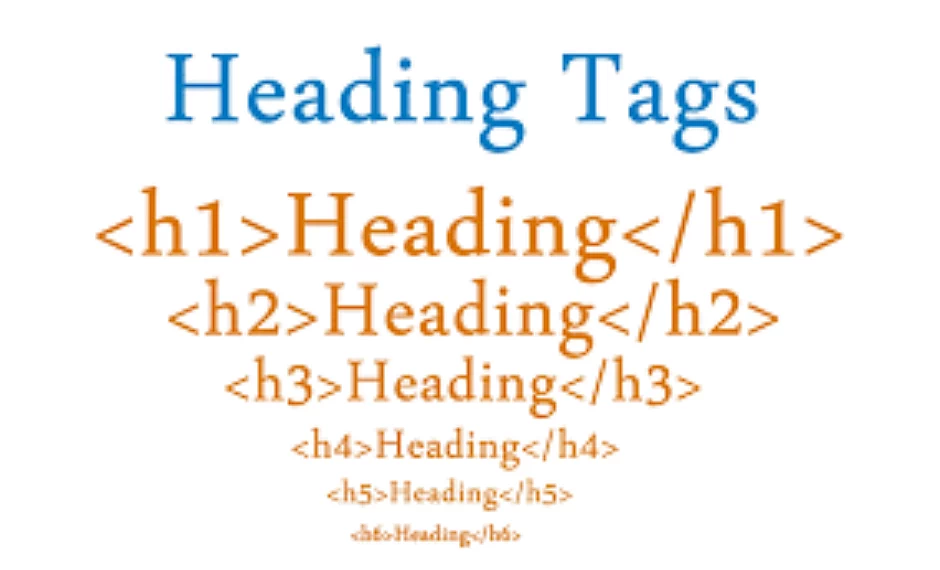
Note: H1 is usually reserved for the Title of the entire website or Title of a page, so you do not use it in your content. H5 & H6 are rarely used outside of highly technical and legal documents that tend to go to that level in the hierarchy.
Caution: Some themes use H2 for the Title of the page. If your website does this, avoid using H2 in the body (content).
What is the Proper use of Headings?
In digital writing, a heading is a structural tool—it acts as a signpost that tells both readers and search bots exactly what a section is about.
Headings were created to enhance the presentation of an article by titling different chapters and sections in the article (blog post). In this way, they provide structure and indicate importance of content. They help the human brain adjust to and anticipate what is coming next. Headings help humans scan the information quickly.
Headings are like labels on file folders. Readers scan them quickly to find exactly what they need. Headings in your blog content are used by humans and the AI and SEO bots in the same way.
While it’s tempting to use headings just to change the size or color of your text, that isn’t their primary job. To get the most out of your layout, try to reserve headings for organizing your ideas. When you need to emphasize a specific word or phrase for purely decorative reasons, using bold or italics keeps your structure clean without confusing search bots or screen readers.
3. Use Question-based Headings
Why use Question-based Headings in my Articles?
Use question-based headings to mimic how people search in 2026. With voice search and AI tools, conversational questions have replaced traditional keywords. The shift from “typing keywords” to “asking questions” is the single biggest change in how the internet works today.
Transforming keyword-based titles into conversational, question-based titles is simple.
Instead of: “Getting cited in Google’s AI Overviews”
Use this: “How do you get cited in Google’s AI Overviews?”
4. Add a Last Updated date at the Top
Why add a Last Updated date to the top of your article?
Add a Last Updated date to the top of your article because AI Overviews prioritize accuracy. A post from 2023 with old stats is less likely to be cited than a 2026 post with updated facts.
The last updated date tells the AI bots when (how recent the information is), while the headers tell them where (the information is in the article). When you write for digital, you are building the map that guides the AI directly to the answers to searchers’ questions.
5. Format Content for Scannability
Readers—both human and programmatic (like AI bots and search crawlers)—rely on a clear underlying structure to navigate your content. When you use formatted elements like:
- Numbered lists for sequences or rankings
- Unordered (bulleted) lists for key features
- Tables for data comparisons
…you are creating “machine-readable” segments. This structure makes it much easier for Google to lift your information directly into an AI answer card, earning you the top spot and making your facts easily digestible for every reader.
Note: An “AI answer card” is the same thing as an “AI Overview” or a “Featured Snippet.” The important takeaway is that Google can more easily grab-n-use your information when it’s neatly wrapped in these structures.
Related Content: Why Your Words are More Important in This AI Era — Learn more about how AI-powered search systems interpret your website’s content.
These are the five key strategies I use to help my clients write clear, authoritative content. By focusing on these structural signals, we’re building a better experience for our readers while ensuring our work earns its place at the top of the search results.
Ready to make your content AI-ready?
AI is changing how we find information online. With AI Overviews now claiming the top spot, your content needs a specific structure to stay visible.
Let’s talk about how to update your approach to writing content. Whether you want a custom blueprint to guide your own writing or a partner to handle the optimization for you, I’m here to help. Schedule a consultation today via the Contact form or email me directly at and let’s build a structure that earns its place at the top!